

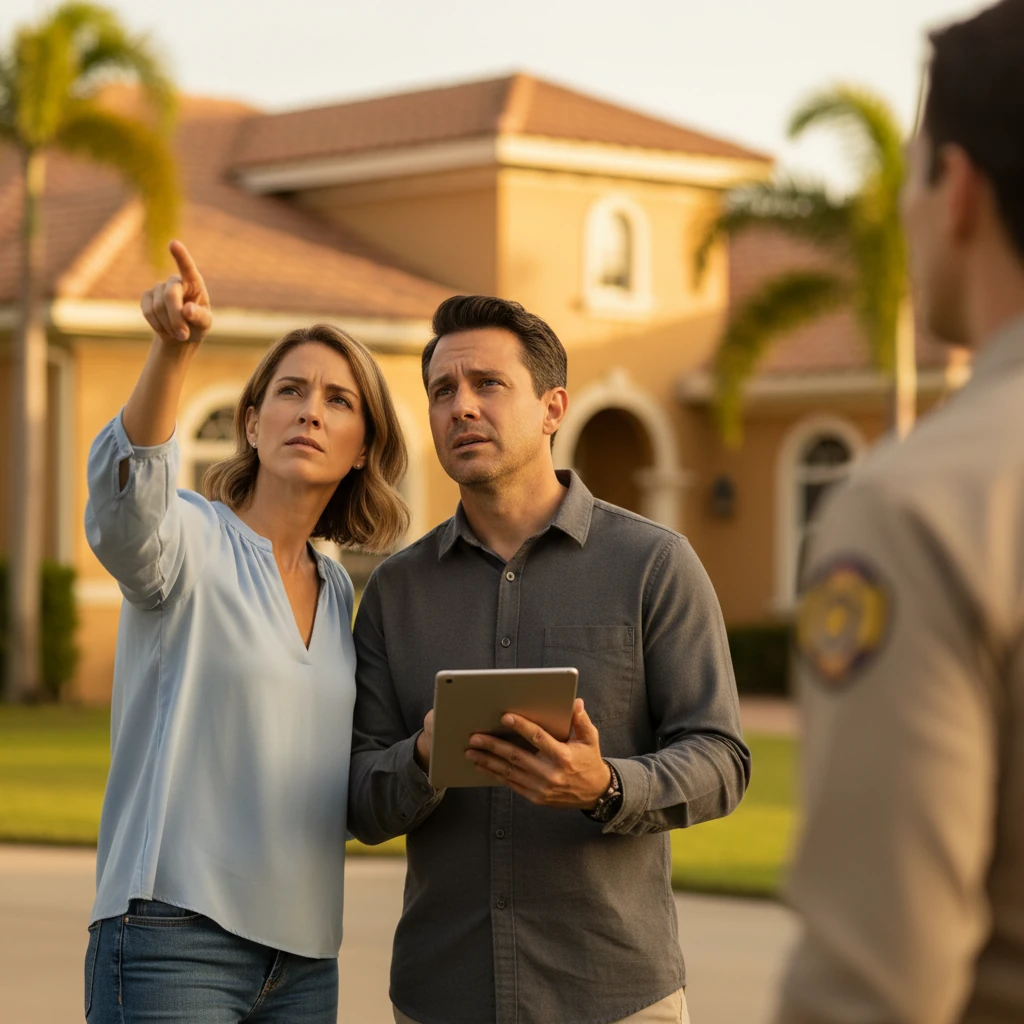
Florida Insurance Inspection Guide
A Florida insurance inspection is a focused report insurers use when you buy, renew, or switch homeowners coverage—most often a 4-point inspection (roof, electrical, plumbing, HVAC), a wind mitigation inspection (hurricane-resistant features on form OIR-B1-1802), or a roof certification when the roof age or condition is in question.
This guide explains what each report covers, which rules come from the Florida Office of Insurance Regulation and Citizens, Green Foot’s posted prices, and how to prepare before the inspector arrives. Updated August 16, 2026.
Green Foot Insurance Inspection Pricing
| 4-Point Inspection | from $125 |
| Wind Mitigation (OIR-B1-1802) | from $100 |
| Roof Certification (2-Year) | from $150 |
| Bundle: 4-Point + Wind | $200 |
Quick Navigation
- What Is a 4-Point Inspection?
- What Is a Wind Mitigation Inspection?
- Why Florida Requires These Inspections
- How to Use These Reports With Your Insurer
- Inspection Costs in South Florida
- 4-Point vs Wind Mitigation: Full Comparison
- How to Prepare Your Home
- My Safe Florida Home Program
- South Florida Market Reality
- Common Misconceptions
- Frequently Asked Questions
What Is a Florida Insurance Inspection?
When insurers say they need an “insurance inspection,” they usually mean one of three reports: a 4-point (roof, electrical, plumbing, HVAC), wind mitigation (hurricane-resistant features on form OIR-B1-1802), or a roof certification (remaining roof life). This page cites the Florida Office of Insurance Regulation (OIR), Florida Statutes 627.711 and 627.0629, and Citizens Property Insurance Corporation. Green Foot prices below are our posted fees—not a statewide survey.
What each report actually does
- 4-Point — Documents four systems for underwriting. Citizens requires it on property-owner, dwelling, and mobile-home applications for homes more than 20 years old.
- Wind mitigation — Documents features on OIR-B1-1802. Florida law requires insurers to offer actuarially reasonable wind credits; the carrier—not the inspector—applies the dollar amount.
We do not quote a premium dollar savings. Your declarations page after the carrier endorses the policy is the only proof of what you actually pay.
What Is a 4-Point Inspection?
A 4-point inspection is a limited, insurance-focused evaluation of the four systems most critical to your home's insurability. Unlike a comprehensive home inspection (which reviews 400+ elements), a 4-point takes 45 minutes to 1 hour and focuses only on these insurance-critical systems.
The Four Systems Evaluated
🏠 Roof Inspection
Evaluates roof condition, age, material, and remaining useful life. Identifies leaks, missing shingles, and structural issues.
⚡ Electrical System
Assesses electrical panel type, wiring condition, safety hazards, and code compliance. Identifies outdated panels that pose fire risks.
🔧 Plumbing System
Examines pipe materials, water heater condition, leaks, and water damage. Identifies problematic materials like polybutylene.
❄️ HVAC System
Evaluates heating and cooling system age, functionality, efficiency, and safety. Ensures systems are operational and safe.
Why Do Insurance Companies Require It?
A 4-point is not a Florida statute. Each carrier writes its own underwriting rules. What we can cite:
- Citizens: requires a four-point inspection for all property-owner, dwelling, and mobile-home applications for properties more than 20 years old. The inspector records age, type, and condition of electrical, plumbing, HVAC, and roof. Serious hazards (exposed wiring, active leaks, or evidence of leaks) should be repaired before you apply. Source: Citizens Inspections.
- Private carriers: often ask for a 4-point on older homes, but the age trigger is the carrier’s rule—not a statewide number. Ask your agent.
The inspection answers: Are these four systems present, identifiable, and in a condition the carrier will underwrite?
The “Citizens Fallback” Myth
Myth: “If I fail my 4-point, I’ll just go with Citizens.”
Fact: Citizens still requires a four-point on those older-home applications. If the report shows hazards Citizens will not bind, you repair first—or your agent shops another market. We do not quote surplus-lines premiums; those vary by risk and surplus carrier.
What Citizens publishes about older roofs
Separate from the 4-point, Citizens says roofs older than 25 years (soft coverings such as shingle) or 50 years (hard coverings such as tile, slate, clay, concrete, or metal) need documentation of at least five years of remaining useful life. If remaining life is less than five years, Citizens requires proof of a full roof replacement before a policy is written. Source: Citizens Inspections. Citizens updated its 4-Point form (Insp4pt 03 25) and Roof Inspection Form (RCF-1 03 25) on March 20, 2025.
What a 4-point does not do
A 4-point does not set your premium and does not replace a buyer’s home inspection. Passing it does not guarantee any carrier will write the risk. We document condition; underwriting decides.
What Is a Wind Mitigation Inspection?
A wind mitigation inspection documents hurricane-resistant construction on Florida’s official Uniform Mitigation Verification Inspection Form (OIR-B1-1802). Florida Statute 627.0629 requires residential insurers to include actuarially reasonable discounts, credits, or deductible reductions for fixtures and construction techniques shown to reduce windstorm loss. The inspector records what is installed. The carrier applies credits from its approved rate filing.
Sourced facts (not a savings promise)
- Inspections on or after April 1, 2026 must use OIR-B1-1802 Rev. 04/26 (OIR; Rule 69O-170.0155). Source: OIR Wind Mitigation Resources.
- The form is valid for up to five years if no material changes are made to the structure and no inaccuracies are found on the form (OIR and Florida DFS).
- Since July 1, 2008, admitted carriers must accept a valid form signed by an authorized inspector (Florida DFS, citing Fla. Stat. 627.711).
- Authorized signers include a Florida-licensed home inspector who completed at least 3 hours of CILB-approved hurricane mitigation training and a proficiency exam (then at least 2 hours of related CE each year), a building-code inspector, a general/building/residential contractor, a professional engineer, a professional architect, or another person the insurer recognizes (Fla. Stat. 627.711(2); DFS).
- The inspector must inspect the structure personally (employees of engineers or contractors may inspect only under the statute’s employee rules).
- OIR updated the form after the June 2024 Applied Research Associates Residential Wind-Loss Mitigation Study. OIR is still evaluating the separate credit-range forms OIR-B1-1699 and OIR-B1-1700 (“updates pending”), so we do not publish a statewide percent-off table.
- Since October 1, 2023, each residential insurer must post hurricane-mitigation credit information on its website (Fla. Stat. 627.0629). That page—or your agent—is where your credit table lives.
- Atlantic hurricane season is June 1–November 30 (OIR).
What the 2026 form documents
Citizens’ March 19, 2026 bulletin lists the mitigation features on the revised form: building code, roof covering, roof deck attachment, roof-to-wall attachment, secondary water resistance (SWR), and opening protection. New fields include FORTIFIED Home™ (Roof, Silver, Gold) certificates, region by design wind speed, and roof slope. Citizens also states those new fields do not change the credits Citizens applies at this time. Source: Citizens form-change bulletin.
Citizens will still accept the prior OIR-B1-1802 (Rev. 01/12) if it was completed within five years before April 1, 2026 and no structural changes have been made. New inspections on or after that date must use Rev. 04/26.
Features we actually look at
- Building code / year built — Whether the home was built to a Florida Building Code edition that the form recognizes.
- Roof covering — Material, permit/installation evidence, and condition as the form requires.
- Roof deck attachment — Fastener type and pattern where we can see it (often from the attic).
- Roof-to-wall connections — Clips, single wraps, double wraps, or toenails, including performance-based retrofits the 04/26 form allows when documented.
- Roof geometry — Hip vs. gable (and multiple slopes on the new form).
- Secondary water resistance — Self-adhering membrane or other SWR the form recognizes.
- Opening protection — Impact-rated products or rated coverings on glazed and non-glazed openings, including garage doors. Partial protection is documented as partial—not as “full credit.”
If the attic is inaccessible, we document what is visible and note limitations. “Unable to verify” is honest; it is not a discount promise.
How credits actually work
Wind-mitigation credits apply to the windstorm / hurricane portion of the premium, not automatically to the whole homeowners bill. The percent—and whether a listed feature even qualifies—is the insurer’s table, not ours. The revised 1802 form itself states that some items on the form may not qualify for a discount with every insurer.
We do not publish a “typical $500–$1,500 a year” or “15–88%” figure. Those ranges are not on the current OIR consumer page, and OIR’s own discount-range forms are marked updates pending.
Citizens rate change (separate from your 1802)
For policies effective on or after July 1, 2026, OIR approved Citizens rate updates that Citizens describes as an average 8.8% decrease for homeowners multiperil statewide and an average 5.1% decrease for homeowners wind-only. The change varies by line, product, and territory; some policy types have decrease caps. That is a rate filing, not a credit from a Green Foot inspection. Source: Citizens July 2026 rate bulletin.
Why Florida Uses These Inspections
Florida’s residential market is hurricane-exposed. The rules below are the ones we can source.
4-Point is underwriting, not a statute
There is no Florida statute titled “every home needs a 4-point.” Carriers use the four systems (roof, electrical, plumbing, HVAC) because those are high-frequency claim drivers. Citizens publishes a hard trigger: applications on homes more than 20 years old. Private carriers pick their own age. A recently replaced roof can look very different from an original covering on a house of the same year built—that is why they inspect instead of rating by age alone.
Wind mitigation is in the statute
Florida Statute 627.0629 says insurers must provide actuarially reasonable savings to consumers who install or implement windstorm-damage mitigation, including roof-to-wall strength, opening protection, and related features. Statute 627.711 requires a uniform inspection form and lists who may sign it. That is why we use OIR-B1-1802 instead of a homemade checklist.
South Florida
Miami-Dade, Broward, and coastal Palm Beach sit in high design-wind regions. Salt air, humidity, and older housing stock show up on 4-points and on 1802 photos. We inspect the 15 advertised corridor cities; jobs farther west or south of that corridor are quoted per call.
How to Use These Reports With Your Insurer
1. Ask your agent which forms they need
Before you book, ask: 4-point, wind mitigation (OIR-B1-1802 Rev. 04/26), roof certification, or a bundle. Citizens’ 20-year four-point rule applies to their applications. Private carriers set their own list.
- Schedule the inspection (clear attic access, panel, water heater, and openings).
- Read the report. Repair hazards Citizens names before you apply: exposed wiring, active leaks, or evidence of leaks.
- Give the PDF to your agent. The carrier—not Green Foot—endorses credits or binds coverage.
2. Get the 1802 before you spend on upgrades
A wind mitigation inspection records what is already installed. If toenails, missing SWR, or partial opening protection show up, you can price retrofits with a contractor using the form as a punch list. Do not assume shutters and impact glass earn the same credit with every carrier—your insurer’s posted discount page is the table that counts (Fla. Stat. 627.0629, effective October 1, 2023).
3. Re-inspect when the house changes
OIR: the 1802 is valid up to five years if the structure is unchanged and the form is accurate. After a reroof, new openings, or new roof-to-wall hardware, get a new form so the file matches the house.
4. Common underwriting red flags we document (not a repair-price list)
- Polybutylene supply piping — many carriers will not write it.
- Federal Pacific or Zinsco panels — often a bindability issue.
- Cloth-jacket or single-strand aluminum branch wiring — Citizens’ 2025 4-point form added fields for these; remediation of single-strand aluminum must be certified by a licensed electrician on Citizens’ form.
- Active roof or plumbing leaks — Citizens says repair before you apply.
Green Foot Insurance Inspection Prices
These are our posted prices for Miami-Dade, Broward, and Palm Beach corridor work—not a statewide market survey.
- 4-Point: from $125
- Wind mitigation (OIR-B1-1802): from $100
- 4-Point + wind on the same visit: $200
- 2-year roof certification: from $150
Larger or limited-access properties may quote higher. Call (786) 301-5677 for the number that applies to your house.
What often shows up on a 4-point
In older South Florida houses we commonly photograph worn coverings, dated panels, polybutylene or corroded supplies, and HVAC near the end of service life. Repair cost is a contractor bid—not a number we invent on this page.
4-Point vs. Wind Mitigation
Many files need both because they answer different questions. Order them together when your agent wants both—one visit, two PDFs.
How to Prepare Your Home for Inspections
Preparation Checklist for 4-Point Inspections
⚠️ What NOT to Do Before Inspection
Don't attempt cosmetic fixes or cover up problems. Inspectors are trained to look behind cosmetic work. Be honest about system age and condition—it will come out in the inspection anyway.
✓ Before Your Inspection:
- Clear Attic Access: Remove boxes, storage items from attic entrance so inspector can fully evaluate roof system
- Locate Electrical Panel: Know where it is and ensure it's accessible (not blocked by furniture/storage)
- Know Your System Age: Gather documentation of when roof, HVAC, plumbing, and electrical work was done (if available)
- Clear Under Sinks: Remove items from under bathroom/kitchen sinks so plumbing can be inspected
- Test HVAC: Ensure your AC and heating work before inspection day
- Unlock Garage/Utility Areas: Inspector needs access to all mechanical systems
- Be Home & Available: Inspector will have questions about system history and maintenance
Preparation Checklist for Wind Mitigation Inspections
✓ Before Your Wind Mitigation Inspection:
- Gather Documentation: Find records of any roof, window, or door replacements or retrofits (dates are important for discounts)
- Document Existing Features: Take note of any hurricane shutters, impact windows, roof clips, or bracing already in place
- Clear Exterior: Trim bushes/trees near doors/windows for photos and visual inspection
- Know Your Roof Type: Hip or gable? (Hip roofs score better)
- List Home Improvements: Any recent upgrades to exterior (siding, doors, windows, etc.)
- Attic Access: Inspector may need to see roof-to-wall connections in attic
What to Fix BEFORE Inspection (If Needed)
If you know you have issues, addressing them before inspection is smarter than dealing with them after:
High Priority (Address Before Inspection):
- Roof leaks or missing shingles
- Electrical hazards (exposed wiring, bad panels)
- Active plumbing leaks or water damage
- Non-functional HVAC systems
Medium Priority (Address Soon):
- Outdated electrical panels (Federal Pacific, Zinsco)
- Polybutylene plumbing (needs replacement)
- Roofs over 15-20 years old
My Safe Florida Home (state program)
My Safe Florida Home is run by the Florida Department of Financial Services. It is not a Green Foot product. Official site: mysafeflhome.com.
- The program advertises free wind-mitigation inspections for eligible homeowners and grants up to $10,000 for approved upgrades.
- The July 2025 homeowner’s guide states the matching grant reimburses two-thirds of approved mitigation cost, with the state contribution capped at $10,000 ($2 state for every $1 you put in), subject to appropriation and eligibility.
- Eligible upgrades the program lists include roof-to-deck attachment, roof-to-wall connections, secondary water resistance, windows, and exterior/garage doors.
- Application windows and income/homestead rules change. Check the official portal before you apply. A paid Green Foot OIR-B1-1802 is a carrier form; MSFH uses its own inspection process for the grant track.
What we can say about the 2026 market
We do not publish a “typical South Florida premium” table. Premiums vary by territory, coverage, deductibles, and the house. Two sourced items:
- Citizens rates (July 1, 2026): Citizens says OIR approved an average 8.8% decrease for homeowners multiperil statewide and an average 5.1% decrease for homeowners wind-only, varying by line, product, and territory. Source: Citizens bulletin.
- Your wind credits: look up the carrier’s hurricane-mitigation discount page (required on insurer websites since October 1, 2023) or ask your agent. We document the 1802; they apply the table.
Citizens remains the residual market. Eligibility, assessments, and take-out rules are between you, your agent, and Citizens—not something an inspector can quote as a dollar comparison to surplus lines.
Common misconceptions
Myth: “A 4-point inspection saves money on the premium.”
Reality: A 4-point is underwriting. It does not generate a wind-mitigation credit. Citizens still requires it on older-home applications.
Myth: “If I fail a 4-point, I’ll just use Citizens.”
Reality: Citizens requires a four-point on property-owner, dwelling, and mobile-home applications for homes more than 20 years old, and says hazards should be repaired before you apply.
Myth: “Wind mitigation saves 15–88% (or $500–$1,500 a year).”
Reality: Those ranges are not on OIR’s current consumer wind-mitigation page, and OIR’s discount-range forms (OIR-B1-1699 / 1700) are marked updates pending. Credits apply from the carrier’s filing, usually to the windstorm portion—not a guaranteed cut of the whole bill.
Myth: “There is no new 1802 form in 2026.”
Reality: Inspections on or after April 1, 2026 must use OIR-B1-1802 Rev. 04/26.
Frequently Asked Questions
No. It documents roof, electrical, plumbing, and HVAC for underwriting. Wind credits come from OIR-B1-1802, applied by the carrier.
Citizens requires a four-point on applications for homes more than 20 years old and says serious hazards (exposed wiring, active leaks, or evidence of leaks) should be repaired before you apply. Source: citizensfla.com/inspections.
Ask your agent. The number we can cite: Citizens requires it on property-owner, dwelling, and mobile-home applications for properties more than 20 years old. Private carriers set their own age triggers.
Roofs older than 25 years (soft/shingle) or 50 years (hard: tile, slate, clay, concrete, or metal) need documentation of at least five years of remaining useful life. Less than five years: Citizens requires proof of a full roof replacement before a policy is written.
Typically 45 minutes to about an hour. Green Foot 4-points start at $125. The 4-point + wind bundle is $200.
Admitted insurers must accept a valid uniform mitigation form signed by an authorized inspector (Fla. Stat. 627.711). You cannot self-certify the features.
OIR: up to five years if no material changes are made to the structure and no inaccuracies are found. After a reroof or other material change, get a new form. Inspections on or after April 1, 2026 use Rev. 04/26.
We do not quote a premium dollar savings. Florida law requires insurers to offer actuarially reasonable wind credits; the carrier applies them from the 1802 and its rate filing. Check the insurer’s posted credit table or your agent. Your declarations page after endorsement is the proof.
Yes. Citizens treats wind-damage mitigation as discount eligibility and requires the current 1802 for new inspections on or after April 1, 2026.
The form documents rated opening protection—impact products or rated coverings—not “windows only.” Whether shutters and glass earn the same credit is the carrier’s table. We record what is installed and labeled.
A DFS program offering free wind-mitigation inspections for eligible homeowners and grants advertised up to $10,000 for approved upgrades, with a matching structure described in the program’s homeowner guide. See mysafeflhome.com. It is separate from a paid Green Foot 1802.
Whatever your agent listed. If the home is more than 20 years old and you are applying to Citizens, plan on a 4-point. If you want wind credits documented, add OIR-B1-1802. Same-visit bundle: $200.
Yes. Green Foot inspectors are Florida-licensed home inspectors (HI7640 and HI8652), CMI-certified, with the hurricane-mitigation training Florida Statute 627.711 requires for home inspectors who sign the form.
We advertise 15 corridor cities from Miami through Jupiter/Wellington. Same-day and next-day slots are often available. Farther west or south is quoted per call.
Ready for the forms your insurer asked for?
Book a 4-point, OIR-B1-1802 wind mitigation, or both with a CMI-certified South Florida inspector. We document the house. Your carrier applies credits and binds coverage.
Why Choose Green Foot Home Inspections?
For Green Foot 4-point and wind mitigation inspections, same-day and next-day slots are often available. Serving Miami-Dade, Broward, and Palm Beach counties.
Cities We Serve in South Florida
We provide 4-point, wind mitigation and roof certification inspections in these 15 corridor cities. Farther jobs are quoted per call.
About This Guide
This comprehensive guide was created by the experts at Green Foot Home Inspections, a CMI-certified inspection company in South Florida. Our CMI-certified inspectors have evaluated thousands of homes across Miami-Dade, Broward, and Palm Beach counties.
Document Version: 3.0 (January 2026)
Data Sources: OIR 2025 Rate Filings, Citizens Property Insurance Corp Manuals, Florida Statute §627.0629, Heritage Insurance, FedNat, 50+ inspection companies
Accuracy Level: Verified against official sources and actual policy data
Last Updated: January 12, 2026